Permissions and cover
Confirm the property's permissions and cover before committing to furnishing and launch costs.
Before anything else
- Your lease, or the title if you are freeholdMany leases restrict short-term letting, sub-letting or business use. Read the clause; do not rely on what a neighbour does.
- Building or management-company rulesConcierge access, lift bookings, bin rules and guest parking are often governed separately from the lease.
- Your mortgage termsLenders set their own conditions on letting. Ask your lender rather than assuming.
- Insurance for your intended useAsk your insurer or broker to confirm cover for your intended paying-guest use.
- The planning position where the property isIn Greater London an entire-home short let is subject to a 90-night annual limit with conditions. Elsewhere in England it turns on whether letting is a material change of use.
If the property is in London, read the 90-night rule guide before you go further. Elsewhere the questions are set locally: the pages for Salford and Stevenage set out the council, lease and building checks that come up in each.
Safety
Obligations differ by property type, tenure and nation, and they change. Work through the current government guidance for letting a self-catering property, and get anything you are unsure about confirmed by a competent professional — a registered gas engineer, a qualified electrician, a fire risk assessor. Written records of every check belong in one place, and your manager will need copies.
The GOV.UK guidance linked below applies to England. Scotland, Wales and Northern Ireland have their own requirements, including different licensing and planning positions, so check the guidance for the nation the property is in. Fire safety guidance for smaller premises in England is published by the Home Office.
Beds and linen
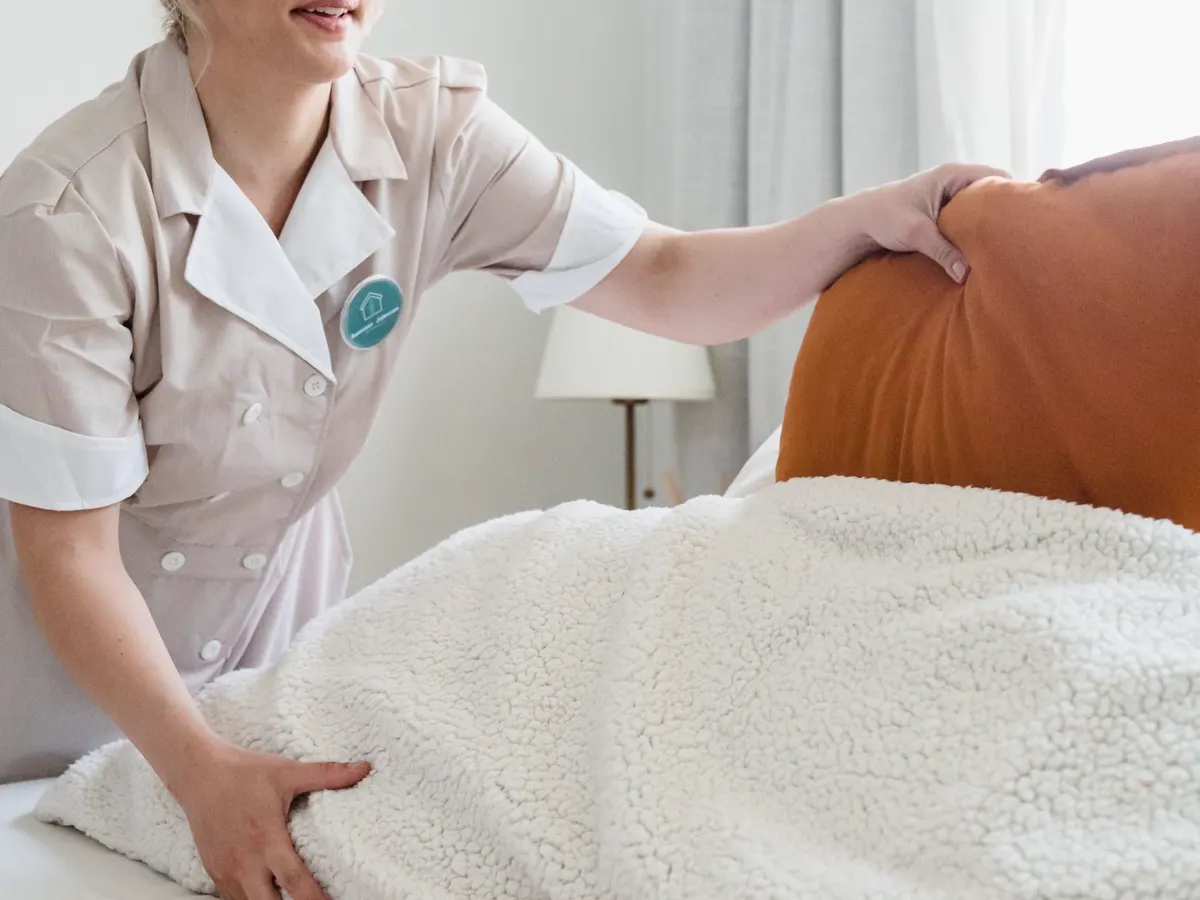
The bed is central to how a stay feels. A good mattress, a mattress protector, a choice of pillow firmness and proper blackout at the window are all worth getting right. Three sets of linen per bed — one on, one in the cupboard, one in the wash — is a useful starting point; how much stock you need depends on how often the property turns over and how laundry is handled. Spare duvets and pillows help, and plain, hard-wearing white cotton makes replacements easy to match.
Kitchen, bathroom and utilities
Equip the kitchen for the number of guests the property sleeps, with matching crockery and cutlery, sharp knives, pans that are not warped, and the small things people notice when they are missing: a bottle opener, a colander, a kettle that is not scaled up. In the bathroom, a strong shower, somewhere to put things down, and a mirror that does not fog.
Put utilities and broadband in place in your own name and test the wi-fi in every room, including the one with the thick wall. If guests may work during their stay, test the connection where they will actually use it.
Arrival and access
Decide how a guest gets in at ten at night in the rain, and write it down. Key safe or smart lock, the exact access route, parking, lift or stair access, bin day and where the bins go, heating controls and how to work them. Clear arrival instructions give guests fewer reasons to call, and make it easier to help quickly when they do.
Inventory and essential supplies
Inventory and essential supplies
- Written inventory with photographsRoom by room, recorded before the first stay. It gives you a clear reference if a question comes up later.
- Consumables for the first turnoversTea, coffee, bin bags, dishwasher tablets, toilet roll, hand soap, cleaning supplies.
- Spares that get lost or brokenGlassware, mugs, remote batteries, light bulbs, a spare set of keys held locally.
- A simple house guideKeep arrival essentials easy to find, with fuller appliance and safety information available.
Photography and the listing
Photograph the finished property and update images when rooms or amenities change. Shoot when it is styled and clean, in daylight with the lights on, straighten every vertical, and include the practical shots guests look for: each bedroom, the bathroom, the kitchen, the workspace, the outside space and how to get in. The listing copy should then describe the property accurately, including the things that are less convenient. Clear copy lets guests decide whether a third-floor walk-up or another practical limitation suits them before they book.
The trial night
Stay a night before the calendar opens. Arrive the way a guest will, use the access instructions you have written, cook something, run the shower, work at the table for an hour, and sleep with the curtains as a guest would find them. Then fix the list you make.
If you would rather not do the preparation alone, a property review covers what the property needs before it goes live, and onboarding is free for new management clients.