Why more than one channel
A single platform gives you a single pool of demand. That is fine when the pool is deep and the property is an obvious fit, and less comfortable in a quiet month, in a location where the demand is corporate rather than leisure, or when a platform changes how listings are ranked. Several suitable channels broaden where the property can be found and let the listing address different types of stay.
How channels differ
Channels are not interchangeable shopfronts. They differ in who is searching, how far ahead they book, how long they stay, what they expect a listing to tell them, how cancellations are handled and what commission applies. A relocation or contractor stay may call for different information from a weekend city break, so one version of the listing may not serve both equally well.
So the property is presented appropriately for each audience — the same home, described for the guest who is actually reading it.
One calendar, many shopfronts
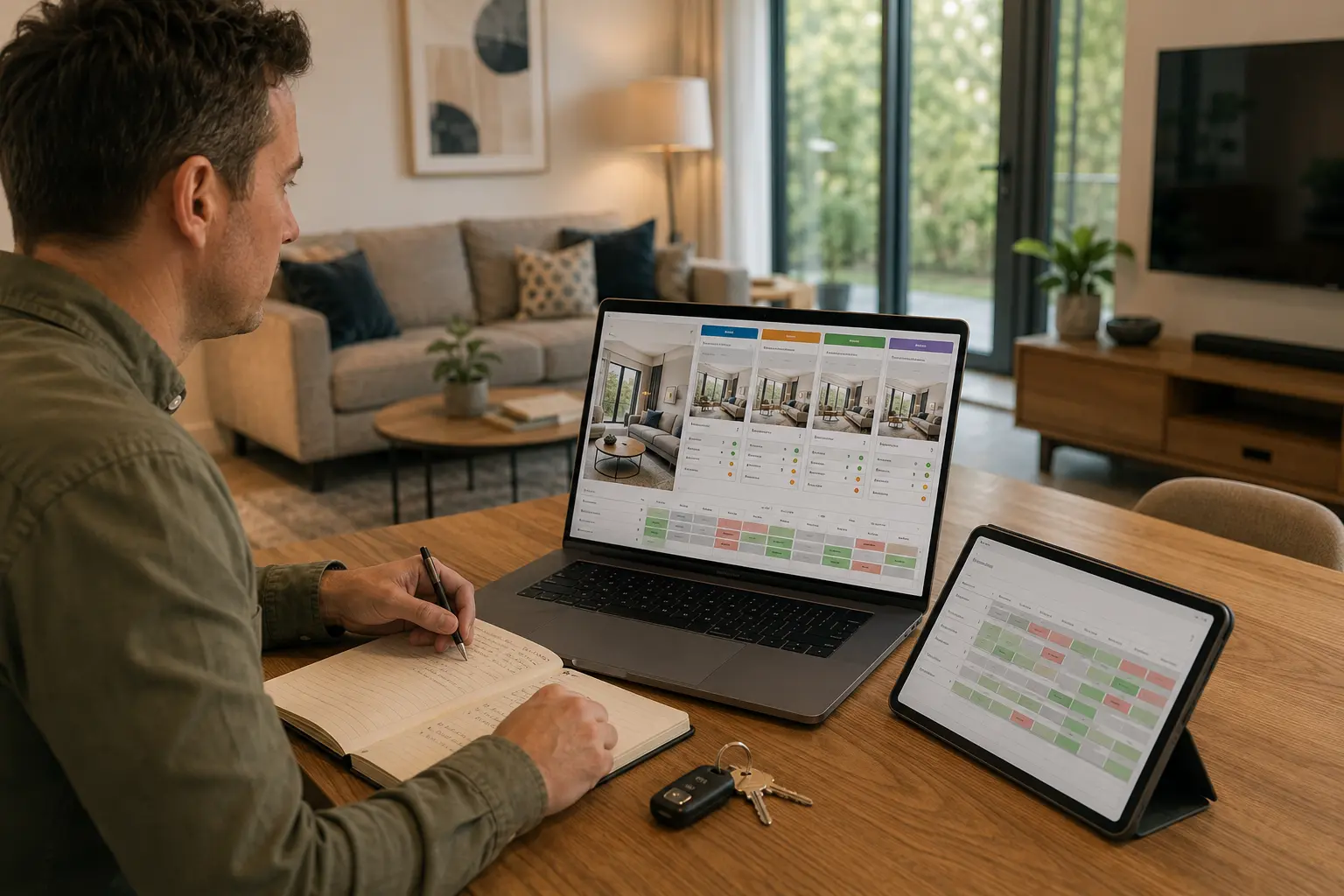
A channel manager coordinates availability across connected booking sources. When a booking is confirmed, those dates are sent to the other connected channels. Connections and update timings vary, so synchronisation needs monitoring and exceptions must be checked; it reduces the risk of overlapping bookings rather than eliminating it.
Rates and policies are handled centrally too, though they do not always apply identically: channels differ in fee structures, cancellation policies and what they allow, so a single change is not always reflected in the same way everywhere.
Where direct booking fits
A direct booking avoids a platform's commission and keeps the guest relationship with the property. It is not cost-free: payment processing, marketing and the operating work behind the booking still carry cost. It will not replace platform demand either, but for repeat guests, longer corporate stays and enquiries that arrive through search it is worth having in place. Hostahome uses direct booking where it suits the property.
Choosing channels per property
What decides the channel mix
- Location and the demand around itA city-centre apartment near a hospital or business district draws different enquiries to a market-town cottage.
- Property type, size and layoutCapacity, parking and workspace decide which audiences a property can actually serve well.
- Length of stay the property suitsSome channels are built around nights, others around weeks or months.
- Any rules that apply to the propertyLease terms, building rules and local planning position can rule a channel out before demand is considered.
If the property is in Greater London, the applicable night limit shapes distribution directly — see London's 90-night rule and what to check.
What this looks like to an owner
For the owner, the practical arrangement is one coordinated calendar and one management contact. Bookings and availability are visible in the Owner Portal, while the agreement confirms how payouts and statements are presented.